
Speech & Language Essentials for Every School
Empowering your staff to support every child in your school with speech and language skills. Suitable for primary, secondary and early years.
This programme is brought to you by:

Today, almost two million children in the UK struggle to speak, listen to and understand the words they hear. 80% of teachers surveyed nationwide are concerned with the speech and language skills of the children in their classrooms, yet many schools report that they lack the training or resources to respond effectively.
This programme is an answer to the crisis. Using the interactive modules, which are designed to be accessible for your whole school, you can upskill your staff and equip them with the knowledge they need to support every child in the classroom.
Written by Speech & Language Therapists who are currently working in schools in the UK, this programme will upskill all staff working with children with Speech, Language and Communication Needs (SLCN) and the broader oracy and language skills of your whole school cohort.
This comprehensive programme includes evidence-based interactive activities, reflections, case examples, videos, downloadable resources and links to recommended sources to develop understanding of the key areas of Speech, Language and Communication.
Through interactive lessons, you will learn across seven key modules focusing on building your awareness and skills in identifying and delivering Speech and Language interventions in your school.
We will support you to develop a whole-school communication-friendly environment that will support teachers, parents and children.
10 reasons why every school needs this programme
National crisis of SLCN – Millions of children in the UK struggle to talk, listen and understand, and their schools lack the ability to help them.
Language underpins learning – Every subject depends on a child's ability to understand and use language; without it, progress across all areas of the curriculum is limited.
Early identification prevents long-term difficulties – Staff trained to spot and support speech and language differences can act early, reducing the risk of academic underachievement and social exclusion.
Supports the whole-school safeguarding duty – KCSIE expects staff to listen to, notice, and act on children’s communication. Understanding SLCN ensures no child’s voice goes unheard.
Meets Ofsted expectations – Inspectors look for evidence that schools are developing pupils’ vocabulary, communication and social skills across the curriculum.
Empowers staff, reducing reliance on external referrals – Practical, classroom-based strategies give teachers and TAs the confidence to act immediately based on the latest evidence base, and the knowledge and skills to follow targets set by specialists.
Creates inclusive, communication-friendly classrooms and whole-school environment – Visuals, structure and talk-rich routines help all pupils – not just those with identified needs – to thrive.
Improves behaviour and wellbeing – Many behavioural or emotional challenges stem from communication frustration; skilled staff can prevent escalation and promote self-expression.
Strengthens home-school partnerships – Staff trained in clear communication can model strategies for parents and reinforce support across environments.
Delivers lasting impact – A communication-skilled school is a learning-skilled school; pupils achieve more, connect better and feel heard.
In this interactive training resource programme, you will learn across seven key modules:
Here, you will learn all about the foundations of communication and how they impact future language and communication development.
In this module, you will learn how language underpins learning, understand the impact of receptive language difficulties, and learn how to apply practical strategies, both for 1:1 or small group and whole-class activities.
You will learn about the typical ages and stages of Expressive Language development and the importance of early identification, as well as strategies to support language and vocabulary enrichment across the curriculum.
In this technical module, you will learn about the anatomy used for speech and what happens when it goes wrong. You will finish this module with a toolbox of creative activities to support speech sound development, both in individual or small group interventions and whole-class strategies.
You will gain a deeper understanding of Pragmatics as more than just social skills, but as the practical application of bringing together all aspects of language. This will support oracy development through combining memory, language inference and social skills to enable effective communication.
This detailed module will explore Autism, Developmental Language Disorder (DLD), Stammering, Selective Mutism and neurodevelopmental and physical profiles. You will learn how Speech, Language and Communication present within them, where to go for further support and information, and how to deliver strategies to support your pupils.
In this final module, we will be bringing together all of your learning around the practical classroom strategies. This will include a classroom and whole-school communication audit alongside key ideas to enable you to build your own Inclusive Communication Policy specifically for your school.
Here are all the products that are included in your bundle.

All Courses, SLE - Speech and Language Essentials

All Courses, SLE - Speech and Language Essentials
Explore the foundations of communication and the essential roles of interaction, attention, and play in the development of Speech, Language, and Communication (SLC) skills.

All Courses, SLE - Speech and Language Essentials
This module stresses the critical role of receptive language for literacy, curriculum access, and social skills. It covers typical development, red flags, and the need for early identification and support to mitigate academic risks.

All Courses, SLE - Speech and Language Essentials

All Courses, SLE - Speech and Language Essentials
Explore the anatomy of speech, typical development, and phonological awareness. Learn to identify delayed vs. atypical errors, master key terminology, and apply strategies to support speech therapy in the classroom.
.png)
All Courses, SLE - Speech and Language Essentials
1:1 / Small Groups – School staff will understand how to effectively identify and then support children in specific interventions, across all areas of speech, language and communication, both in 1:1 and in small groups.
Wider Classroom – The whole staff team will be enabled to embed support for SLCN into the classroom using our suggested strategies and activities, so that communication opportunities are maximised across the school day.
Whole School – Working together, you will build a whole-school approach, ensuring your school is a communication-friendly environment with accessible communication for children, school staff and parents.
Personalised support to help you make the most of Speech and Language Essentials for Every School
We will run a whole-school online meeting, which anyone can attend. This will introduce the programme to your staff team and aim for whole-school buy-in!
We will kickstart your programme journey by supporting you to complete the Audit Tool. You will then be able to identify a clear action plan.
In this meeting for SLTs, SENDCOs and team leads (or the person coordinating the programme for the school) we will be looking at how this programme can best fit into your individual school.
Together, we will consider the importance of visual communication before looking at environmental audits and how we can enhance the communication environment in your school.
This session is for SENDCOs and SLTs who are looking for support to identify and prioritise children with SLCN in their schools. We will develop a prioritisation tool which they can then use immediately.
We will choose and explore a key area (foundations / receptive / expressive / pragmatics / speech) based on your programme journey so far or priorities in school. We will then look at how to embed strategies and set an action plan.
We will choose and explore a key area (Autism, DLD, stammering, etc.) based on your programme journey so far or priorities in school. We will then look at how to embed strategies and set an action plan.
In this session, you can bring speech and language targets for a child you are currently working with and we will brainstorm activity ideas together. (NB: We will need the information in advance of this session.)
This session is aimed at SENDCOs, SLTs and staff working in hubs who are looking to set up or review the delivery of a resource hub in school. We will focus on practical strategies and you will leave with a clear action plan.
This session is your opportunity to bring queries on learning you have completed in our programme. We can discuss any areas of content or resources.
This session will be focused on supporting you to build your own school Inclusive Communication Policy. We will review the step-by-step activities together and guide you to personalise this for your school.
In this follow-up Audit session, we will be looking at your Audit progress. We can then support you to build an action plan for your next steps. (NB: You will need to share your audit document ahead of this session.)
This consultation is based across two sessions and is for schools wishing to complete the Award tool. We will provide support in Session A and then use Session B to review and give feedback on your submission.
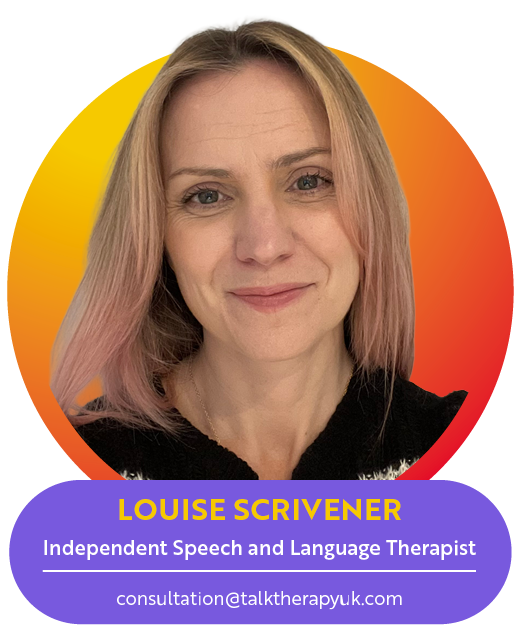
Louise Scrivener
Louise qualified as a Speech and Language Therapist in 2000 and has worked across diverse settings including mainstream schools, colleges and forensic services. In 2006, she founded her independent practice, Talk Therapy, which has grown into a thriving service. She also co-leads a multidisciplinary Autism and ADHD diagnostic service, providing Autism and combined Autism and ADHD (AuDHD) assessments for children and adults. She completed a Master’s degree in complex communication in 2009, a Postgraduate Certificate in Dyslexia in 2012, and a Postgraduate Certificate in Autism in 2023, before progressing to doctoral study focused on amplifying the voices of non-speaking Autistic children.
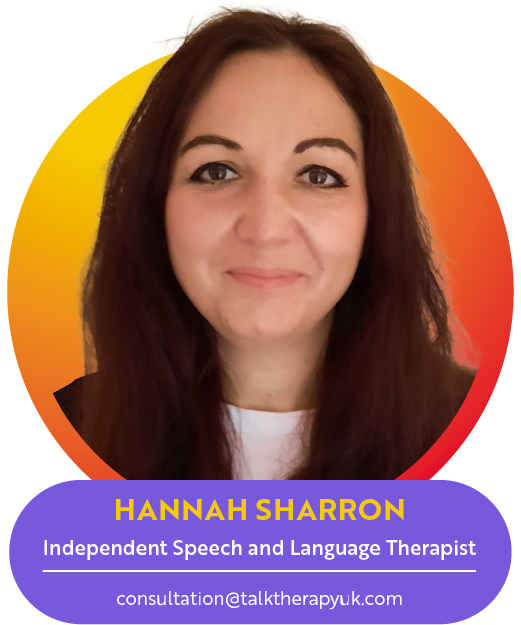
Hannah Sharron
Hannah’s early career included supporting children in a specialist SEMH school and working in children’s homes with young people experiencing complex mental and emotional health needs. She qualified as a Speech and Language Therapist in 2020, beginning her career in the NHS within community paediatrics before joining Talk Therapy in 2022. Since then, she has supported children across schools, nurseries and home settings. Hannah works closely with SENCOs, teachers and families to build practical, everyday strategies that support meaningful communication.
£1650 + VAT
£2450 + VAT
£3350 + VAT

.png)
.png)